This page includes materials and helpful resources mentioned in our Supported Decision Making webinar series.
The Regional Quality Councils and Regional Capacity Building Networks hosted a lunch and learn series to talk about the variety of supports someone can receive to help them make decisions.
Every person and family has a unique path. The series provides information and resources so people can make the decisions that are right for their situation. There is a continuum of support, from informal help from family and friends, to formal tools and legal supports. Each person may need different types of support at different times in their life.
There were a variety of perspectives and experiences from presenters/panelists, including people with disabilities, family members, and professionals who have expertise in this area.
Click here to view a YouTube Playlist with recordings of this 4 part webinar series.
Presentations
February 6th: General Overview
The first session in the series was a general overview of Supported Decision Making and Guardianship. Attendees received information about the wide range of ways to support people in making decisions. The session was led by Anita Raymond, from the Center for Excellence in Supported Decision Making.
Supported Decision Making Graphic
February 13th: Self Advocate and Parent Panel
In this session we invited people with disabilities and their family members to share their lived experiences in decision making. We explored who makes decisions in each family, what supports are needed to make informed decisions, what happens if there are disagreements, and more!
February 20th: Special Education with and without guardianship
This session focused on what happens when a student receiving special education in Minnesota turns 18. The Minnesota Department of Education explained the ‘age of majority’ and transfer of rights. Wendy Fritz, a transition facilitator with Detroit Lakes Public Schools, shared her experience supporting students who are their own guardians as well as those with guardianship.
February 27th: Legal considerations
This session started with an overview of the Guardianship Bill of Rights and explore the legal process, considerations, and potential challenges for someone under guardianship who wants to have it ended. The session was led by Rebecca Wanous and Natalie Bielenberg from Autism Advocacy and Law, who shared practical insights and answered questions.
Get Involved
If you want to get involved in this area or other related issues, consider the following resources:
Join us on April 29th for Disability Day at the Capitol
Check out the West Central Transition Checklists/Resources. Hint: There is a section on Guardianship and Supported Decision Making.
View this guide to Preparing for Adulthood: A Parent’s Guide to Independence
Learn about how to advocate for disability rights with this Advocacy Toolkit.
Contact Us if you have additional questions about supported decision making, or to learn about other ways you can get involved.
Impact
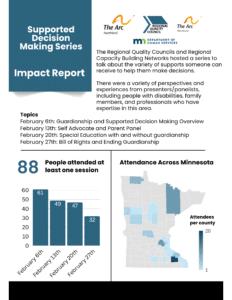
Across this four part series, 88 people attended at least one session. Our lowest attended session had 32 attendees and our highest had 61. Overall, each session had a positive response from participants.
Check out the series report to find out more about the impact of this training series.